
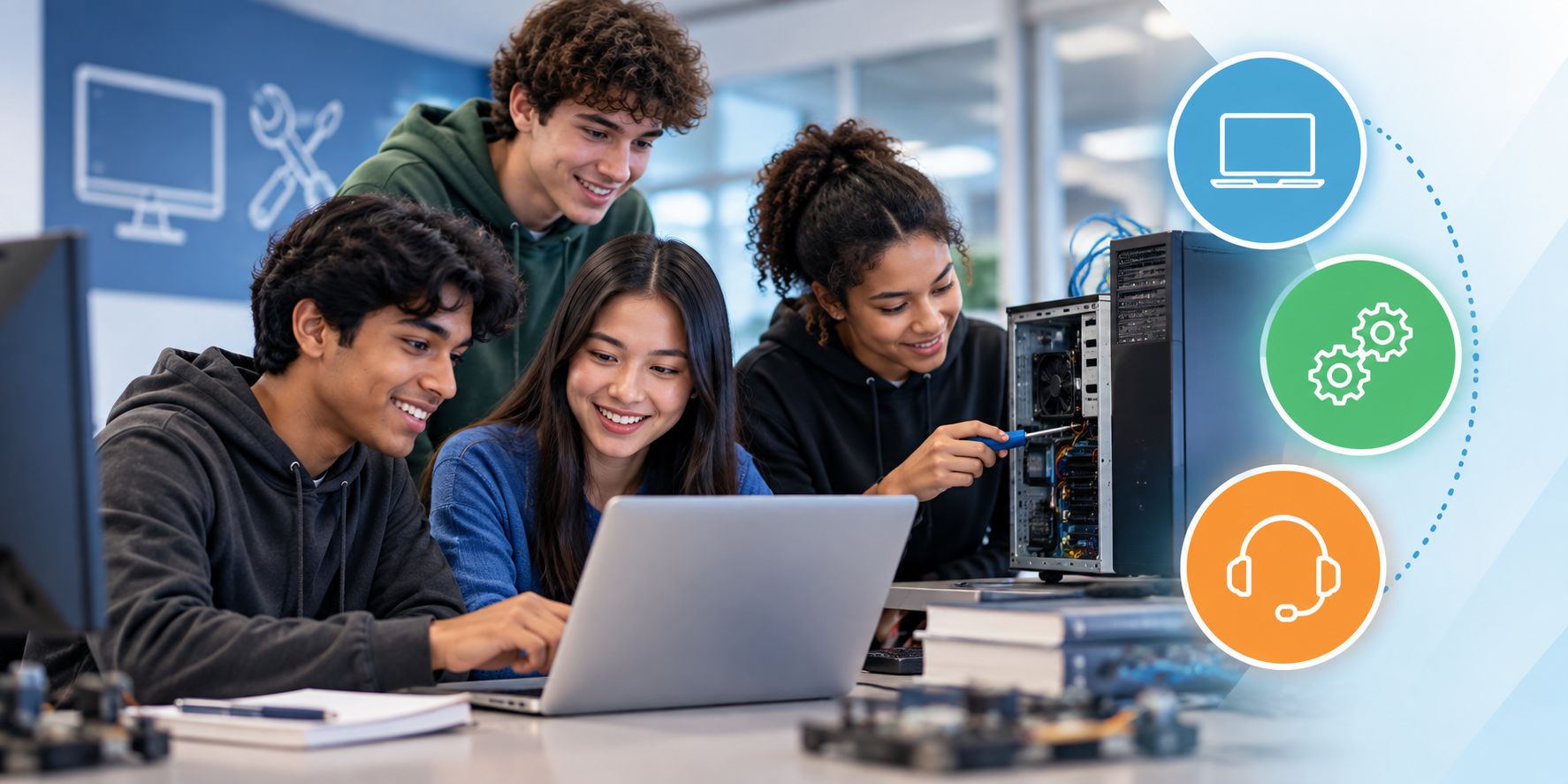
Information technology leaders have long viewed internships as a way to grow talent while expanding their team’s capabilities. Today’s high school students have lived their entire lives surrounded by technology. They are generally comfortable with computers, mobile devices, applications, and online tools.
But being comfortable with technology and being ready to work in an enterprise IT environment are two different things.
The skills and interest these students bring to the workplace still need to be developed before they can become productive members of an IT team. Training is an important part of that process, but it also takes time from experienced staff who already have plenty of work to do.
A well-planned online learning program can help. It does not replace mentoring or hands-on experience, but it can give an incoming intern foundational knowledge before an experienced technician begins working with them on the job.
In my experience with internship programs, the best approach is to introduce a set of skills, allow the intern to apply those skills under supervision, and then move on to the next level. Learn it, apply it, demonstrate it, and advance.
At SchoolDay Academy, powered by Coursera, incoming interns can build these foundational skills through three short courses in our Enterprise IT Fundamentals collection.

Each of these courses focus on different skillsets that prepare the intern for immediate hands-on experiences before being introduced to the next set of skills. Let’s look at each of these courses in detail.
Introduction to Computers
This first course provides the foundation. Upon completion, students can:
- Identify the key components of a computer system, including the CPU, memory, storage devices, input/output devices, and peripherals.
- Describe how computer system components interact with the operating system, including how the CPU processes instructions, how memory is managed, and the role of device drivers.
- Discuss the relationship among security, hardware, and software and how each contributes to overall system functionality.
With these skills, interns can begin assisting experienced staff with tasks such as deploying or relocating workstations, setting up computer labs, connecting peripherals, preparing devices, and organizing equipment.
These assignments allow students to connect what they have learned with the equipment and procedures used in a real IT department.
Introduction to Hardware and Operating Systems
The second course takes those foundational skills to the next level. Upon completion, students can:
- Identify the hardware components of desktops, laptops, and other devices, along with operating system functions, settings, and troubleshooting processes.
- Explore ports, connectors, storage devices, and GPU architectures and evaluate appropriate processing and hardware solutions for different applications.
- Evaluate virtual reality and augmented reality technologies, including hardware requirements, deployment considerations, and potential organizational uses.
- Develop an understanding of secure IoT integration for wearable devices and smart technologies using device management and cybersecurity principles.
After demonstrating these skills, interns may be ready to assist with more direct end-user support under the supervision of experienced IT staff. This might include preparing new devices, troubleshooting routine problems, documenting issues, or assisting technicians with service requests.
This is also where students begin learning an important lesson: technical knowledge is only part of the job. Listening to users, asking good questions, communicating clearly, documenting problems, and knowing when to ask for help are important IT skills as well.
Technical Support Fundamentals
The third course moves interns further into technical support. Upon completion, students can:
- Understand how the binary system works.
- Assemble a computer from individual components.
- Choose and install an operating system on a computer.
- Understand what the Internet is, how it works, and the role it plays in the modern world.
- Understand how applications are created and how they operate within a computer system.
- Use common problem-solving methodologies and professional communication skills in an information technology environment.
At this point, students can begin applying what they have learned to more meaningful support situations and become contributing members of the team.
Completing an online course does not make a student an independent IT technician. The coursework provides the knowledge. The internship provides the experience. It is the combination of the two that creates the real learning opportunity.
District IT departments also manage sensitive systems, accounts, devices, and data. Interns should have clearly defined responsibilities, appropriate supervision, and only the system access needed to perform their assigned work.
Building Skills for the Future
The goal of an internship is not to turn a high school student into an experienced technician overnight. The goal is to give them a solid foundation, let them apply what they are learning in a real-world environment, and gradually increase their responsibilities as their skills grow.
For IT departments, this approach allows experienced staff to spend less time teaching basic concepts and more time mentoring students as they apply those concepts to actual work.
Over the course of my career, I have seen how quickly young people can grow when you give them good instruction, meaningful work, clear expectations, and experienced people willing to guide them.
Learning in information technology never really stops. With a strong foundation and meaningful workplace experience, interns can leave the program better prepared to continue developing their skills and exploring the many career opportunities available in IT.
If you would like to learn more about how SchoolDay Academy, powered by Coursera, can help support the training component of an IT internship program, please contact us at sales@schoolday.academy.